It is Tuesday morning.
The office looks almost full in the booking system. Most desks are marked as reserved. A project team planned to meet in person. A manager expects the space to be busy. Facilities already prepared for a high-attendance day.
But when people start walking through the office, reality looks different.
A few desks are empty, even though they were booked. One team moved to a meeting room for most of the day. Someone reserved a desk “just in case” and never arrived. Another employee came in without booking anything. A quiet zone is almost empty, while one part of the office feels overcrowded.
On paper, the workplace is organized.
In real life, it is changing every minute.
That is the real challenge of hybrid work.
Hybrid work made the office harder to understand
Hybrid work did not make offices disappear. It made them more unpredictable.
Employees no longer come in five days a week. Teams rotate between remote and in-office work. Some people visit the office only for workshops, client meetings or team days. Others come in regularly, but not always on the same schedule.
For enterprise organizations, this creates a difficult question:
How do you manage an office when planned attendance and actual attendance are no longer the same thing?
Most companies know how many desks they have. They know how many employees are assigned to a location. They may also know who booked a workspace.
But that is not the same as knowing how the office is actually used.
They often do not know which desks are truly occupied, which zones remain empty, how often reservations go unused, when collaboration actually happens, or how attendance patterns change across teams and locations.
This gap between planned workplace usage and real workplace behavior is becoming one of the biggest operational problems in hybrid office management.
The problem with traditional desk booking software
Traditional desk booking software is useful, but it usually depends on declared intent.
An employee books a desk. The system assumes they will arrive. The workplace dashboard treats that desk as unavailable.
But real behavior is messier.
People cancel plans. Meetings move online. Employees leave early. Some reserve desks just in case. Others forget to check in. Some spend most of the day in meeting rooms, phone booths or collaboration areas instead of at their booked desks.
The result is a workplace system that may look organized, but does not fully reflect reality.
This creates several problems.
The first one is ghost bookings. Desks appear occupied in the system even when nobody is actually using them. Employees looking for a place to work may think the office is full, while empty desks are sitting unused.
The second problem is poor space optimization. Workplace and facilities teams struggle to understand which zones are underused, which areas are overcrowded and whether the company is paying for more office space than it really needs.
The third problem is limited visibility into hybrid work. Managers may see bookings, but not true attendance patterns. They may know who planned to come in, but not how often teams actually meet, collaborate or use the office.
And finally, many workplace operations remain manual. Someone has to monitor unused reservations, prepare reports, adjust cleaning schedules, release desks or answer repeated questions about availability.
That may work in a small office.
It does not scale well across enterprise workplaces.
Why real-time workplace intelligence changes the game
Modern hybrid offices need more than reservations.
They need real-time workplace intelligence.
This means connecting workplace management software with real occupancy data, so companies can understand not only what employees planned to do, but what is actually happening in the office.
With smart occupancy sensors, the workplace becomes a live operational system.
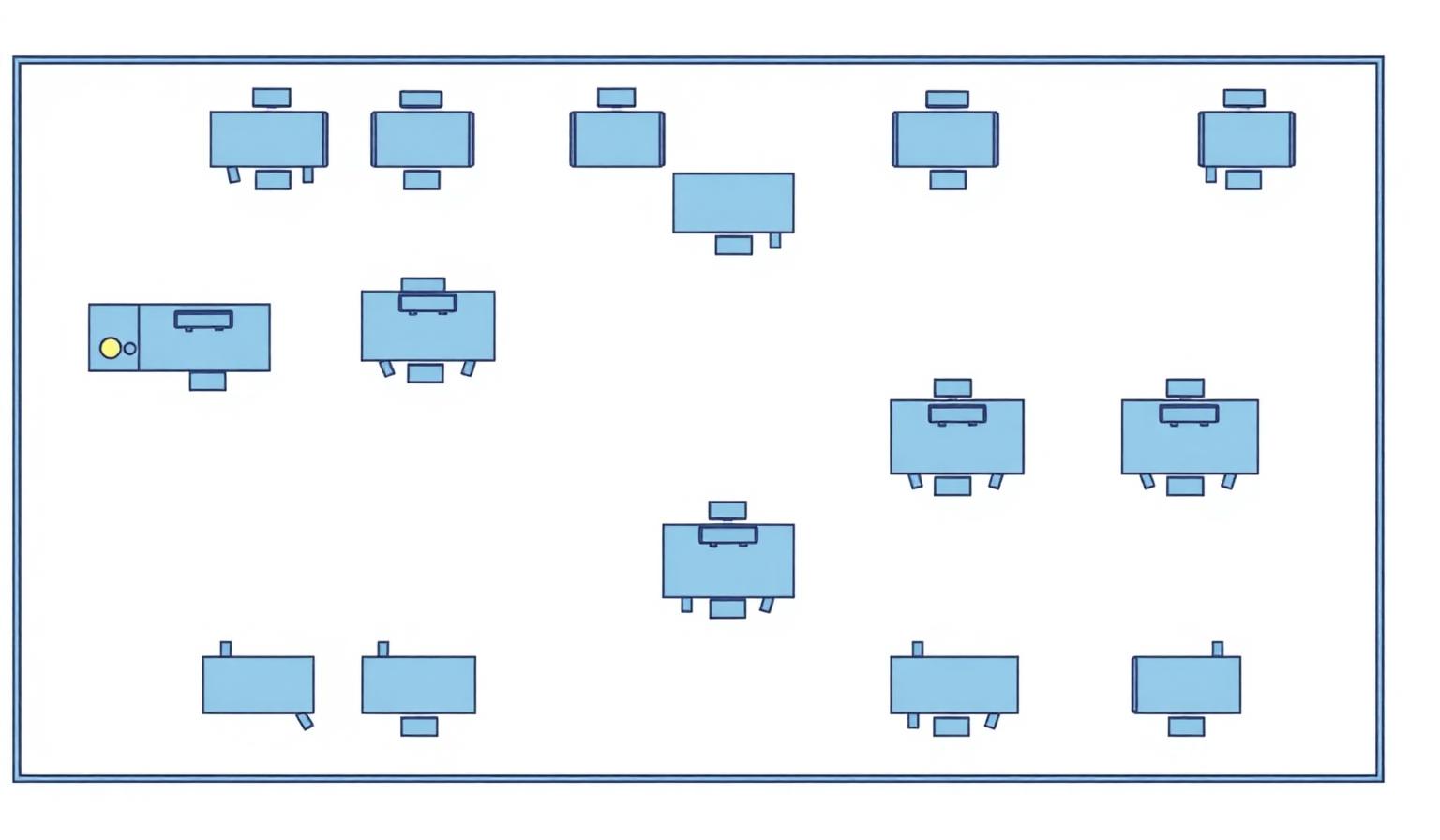
A desk is not just “reserved” or “available” in theory. The platform can understand whether it is actually being used. A meeting room is not just blocked in the calendar. The organization can see whether it is truly occupied. A floor plan is no longer a static map. It becomes a live view of office activity.
That shift is important because hybrid work is dynamic.
The tools managing it should be dynamic too.
How smart office occupancy sensors work
Wireless occupancy sensors can be installed under desks, inside meeting rooms or across office zones. They detect real occupancy and send live updates to the workplace platform.
For enterprise companies, this is especially important because large office deployments cannot depend on complex cabling, heavy maintenance or constant manual setup.
Modern enterprise-grade sensors can operate for up to eight years on a single battery, which makes them practical for larger organizations that want real-time visibility without adding unnecessary operational overhead.
When connected with a platform like Usecoord, these sensors help companies create a live layer of workplace intelligence.
That layer can show which desks are occupied, which workspaces are available, where office activity is happening and how workplace usage changes throughout the day.
Instead of guessing, teams can finally see the office as it really is.
A live office map, not just a floor plan
One of the biggest benefits of real-time occupancy data is live office visibility.
For employees, this means less friction.
They can see where desks are available. They can find teammates more easily. They can choose a workspace based on what is actually happening in the office, not based on outdated bookings.
For managers, this creates better coordination.
They can understand when teams are present, where collaboration is happening and how the office supports different work patterns.
For workplace and facilities teams, it creates a much clearer operational picture.
They can see which areas are active, which zones are underused and how demand changes during the week.
The office stops being a static layout.
It becomes a living system.
Eliminating ghost bookings automatically
Ghost bookings are one of the most common frustrations in hybrid offices.
Someone books a desk but never arrives. The system keeps the desk blocked. Another employee cannot reserve it, even though it is physically empty.
With occupancy-based workplace intelligence, this problem can be handled automatically.
If a reserved desk remains empty, the system can detect that no one is using it and release it back into availability. That means better desk utilization without forcing employees to manually check in, cancel or update every reservation.
This is where workplace automation becomes valuable.
The goal is not to add another process for employees.
The goal is to make the workplace respond to reality.
Analytics that reflect actual behavior
Many workplace analytics tools show what people planned.
Real-time occupancy analytics show what actually happened.
That difference matters.
With real occupancy data, organizations can understand true desk utilization, peak office days, hybrid attendance patterns, underused zones, collaboration hotspots and long-term workplace trends.
This helps leaders make better decisions about office size, redesign, team coordination, hybrid work policies and real estate investments.
For example, if one floor is consistently underused, the company can redesign it, repurpose it or reduce wasted space. If certain days are overcrowded, teams can coordinate attendance more intelligently. If collaboration areas are used more than traditional desks, the office layout can evolve around real demand.
The most important point is simple:
Better data leads to better workplace decisions.
Smarter workplace operations
Real-time occupancy data also helps automate daily office operations.
Instead of manually checking which desks are free, the system can update availability automatically.
Instead of cleaning every area the same way, teams can prioritize spaces that were actually used.
Instead of relying on static reports, workplace managers can monitor live office activity and identify trends over time.
This can support workflows such as automatic desk release, room availability updates, occupancy notifications, cleaning triggers, energy optimization and workplace status automation.
For enterprise organizations, these small operational improvements can add up quickly across multiple floors, locations and teams.
The future of hybrid workplace management
The modern office is no longer just a physical space with desks, rooms and meeting areas.
It is becoming a dynamic operational environment.
Companies that understand how their offices are truly used can create better employee experiences, reduce wasted space, improve workplace efficiency and make more informed real estate decisions.
This is why workplace intelligence is becoming more important.
Desk booking answers one question:
Who planned to use the office?
Real-time workplace intelligence answers a much more valuable question:
How is the office actually being used right now?
That is the difference between managing a hybrid workplace on assumptions and managing it with real visibility.
What Usecoord is building
Usecoord is expanding beyond traditional desk booking software into a workplace intelligence platform for modern hybrid offices.
By combining workplace management, live occupancy visibility, wireless smart office sensors, workplace analytics and enterprise integrations, Usecoord helps organizations understand and optimize how their offices operate in real life — not only how they were planned on paper.
Because the future of workplace management is not just reservations.
It is real-time workplace intelligence.
Looking to optimize your hybrid workplace?
Usecoord is currently working with enterprise organizations interested in smart office deployments, real-time occupancy visibility and workplace intelligence solutions.
To discuss enterprise deployments, pilot programs or smart office integrations, contact us at contact@usecoord.com.